Se afișează postările cu eticheta China. Afișați toate postările

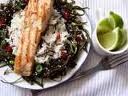
Benefits of seaweed


Seaweed is easily assimilated by the body, being low in fat but rich in mineral salts (potassium, iodine, magnesium, calcium, iron, zinc, copper, manganese, selenium, silicon, phosphorus, boron), dietary fiber (alginate, laminarina, fukoidan), vitamins (A, B, C, E), amino acids and proteins.

Seaweed helps to eliminate toxic substances from the body, activating the thyroid function and circulation can be eaten either raw sanguina.Algele, dried, either in the form of supplements.

If used in cellulite creams, seaweed helps reduce subcutaneous fat, harmonious redistribution normal adipocytes, increase firmness and skin elasticity. Thus, the skin looking orange peel regains smoothness.

Algae are recommended in diets because they contain a number of polysaccharides (dietary fiber), which lower cholesterol levels and give a feeling of fullness, with the ability to moisturize a lot, boost immunity, delayed and premature aging are indicated for the prevention of various cancers.

Eat with regulariate, seaweed can dramatically improve your lifestyle, they can significantly improve physical and mental fatigue, anemia, endocrine disorders, rinofaringitele, allergies and various skin disorders, osteoporosis, sequelae after fractures, stress or fatigue.
www.tratamente-naturiste.org

Wild Geranium, Cranesbill Geranium maculatum


Found in rich woods
Wild geraniums are not related to the garden varieties you get at the nursery.
Antiviral Res. 2008 Aug;79(2):114-20. Epub 2008 Apr 7.

In vitro and in vivo anti-hepatitis B virus activities of a plant extract from Geranium carolinianum L.
Li J, Huang H, Feng M, Zhou W, Shi X, Zhou P.

Department of Biosynthetic Medicinal Chemistry, School of Pharmaceutical Sciences, Fudan University, Shanghai 200032, PR China.

Abstract
Natural products provide a large reservoir of potentially active agents with anti-hepatitis B virus (HBV) activity. We examined the effect of the polyphenolic extract from Geranium carolinianum L. (PPGC) on HBV replication both in vitro and in vivo. In the human HBV-transfected liver cell line HepG(2) 2.2.15, PPGC effectively suppressed the secretion of the HBV antigens in a dose-dependent manner with IC(50) values of 46.85 microg/ml for HBsAg and 65.60 microg/ml for HBeAg at day 9. Consistent with the HBV antigen reduction, PPGC (100 microg/ml) also reduced HBV DNA level by 35.9%. In the duck hepatitis B virus (DHBV) infected ducks, after PPGC was dosed intragastricly (i.g.) once a day for 10 days, the plasma DHBV DNA level was reduced, with an ED(50) value of 47.54 mg/kg. In addition, Southern blot analysis confirmed the in vivo anti-HBV effect of PPGC in ducks and PPGC also reduced the plasma and the liver DHBV DNA level in a dose-dependent manner. Furthermore, significant improvement of the liver was observed after PPGC treatment, as evaluated by the histopathological analysis.

www.altnature.com

Ginkgo Biloba

Other Names: Ginkgo, Maidenhair Tree, Golden Fossil Tree
Habitat Perennial deciduous tree, native to eastern China. Ginkgo Biloba is the oldest species of tree still living on the earth and can be traced back more than 300 million years. For this reason, ginkgo is often referred to as "the living fossil." A species of the family Ginkgoaceae, it is the only one of the family known to have survived the Ice Age. Cultivate with care, grow in gallon pots for a year or two before transplanting seedlings to their permanent location in the garden or landscape. Plant one for your Great, Great, Great, etc. grandchildren. They grow as tall as 70 feet and live (some say) a thousand years. When male and female trees are grown together, the female produces yellow plum-like fruits in autumn which when ripe look (strangely) like little brains! When these fall to the ground and are squashed they give off a truly disgusting odor (like rancid butter) but contained within the fruit is a seed which is considered a delicacy in China where it is usually roasted before being eaten. The leaves are green to gold, fan-shaped, petioled, with many radiating veins and about 4 to 5 inches wide. Gather fresh green leaves in summer, dry for later use.

Properties Extracts of the fruit and leaves of the Ginkgo tree have been used in China for over 5,000 years. Ginkgo Biloba has been historically used in alternative medicine for Heart disease, Kidney disorders, Alzheimer's, Asthma and as an energy builder. Recently western researchers have been studying ginkgo biloba as a treatment for senility, hardening of the arteries, and as a treatment for oxygen deprivation. In over 34 human studies on Ginkgo it increases the body's production of the universal energy molecule adenosine triphosphate, commonly called ATP. This activity has been shown to boost the brains energy metabolism of glucose and increase electrical activity. Scientists also discovered that ginkgo contains an abundance of useful compounds including the antioxidants Vitamin C and carotenoids, but it is the flavanoid compounds collectively known as "ginkgolides" that are the most remarkable. The ginkgo flavonoids act specifically to dilate the smallest segment of the circulatory system, the micro-capillaries, which has a widespread affect on the organs, especially the brain. Researchers have also reported that Ginkgo extracts effectively increase blood circulation and increase oxygen levels in brain tissues. Ginkgo is also a powerful antioxidant that prevents platelet aggregation inside arterial walls, keeping them flexible and decreasing the formation of arteriosclerositic plaque. It has also been shown to help restore circulation to areas of the brain damaged by stroke. Ginkgo has a positive effect in Dementia cases, fighting free radicals in the blood system, protecting against chromosomal damage (proven with Chernobyl workers). Ischemia-induced spinal cord injury protection, heart muscle ischemia and reper-fusion injury protection. Protection against retinal damage, helping with tinnitus, headaches, vertigo, hearing loss, depression, allergies, atherosclerosis, cardiac arrhythmia, diabetic peripheral disease, eczema, glaucoma, impotency, retinitis, to treat asthma, to aid digestion, and bring back sexual energy as well as treating early stages of Alzheimer's disease. The brain is one of the most metabolically active tissues in the human body. It uses a great deal of energy which requires a steady supply of oxygen and glucose. Unlike most other tissues, the brain has very little energy reserve which makes it extremely susceptible to the effects of poor blood supply. When circulation is inadequate, the brain cannot function at its full capacity. The big news for ginkgo came in October 1997 when the Journal of the American Medical Association published the results of a study that confirmed that ginkgo had a positive effect in cases of dementia. They used only patients whose main problem was mental impairment, whether someone had termed it Alzheimer’s or not. They used every control imaginable and rated progress on three different scales to make sure that their results were accurate. Researchers even went so far as to switch everyone from the placebo to the real medicine and vice versa in the middle of the study. There is no doubt about it. Ginkgo stopped the progress of the disease in most cases, and many cases reversed the damage. A Swedish study showed that ginkgo improved the distance-vision of people who already showed signs of degeneration in the retina. The disease macular degeneration, a leading cause of blindness, is strongly related to hemorrhages in the fine blood vessels in the eye, possibly due to oxidative stress. By strengthening the tiny blood vessels in the eye, and by acting as an antioxidant, ginkgo provides a double whammy against eye diseases. It eliminates waste material and inhibits the clumping of blood platelets and prevents circulating platelets from sticking together, which contributes to heart problems, strokes and artery conditions. Ginkgo is an adaptogen herb, which helps the body with stressful situations. It is also helpful in the treatment of allergies, Alzheimer's disease, anxiety attacks, arthritis, ADD, circulatory disorders, cancer, coughs, depression, dizziness, equilibrium problems, headaches, heart & lung problems, memory loss, mood swings, muscular degeneration, tinnitus, toxic shock syndrome, varicose veins, vascular impotence & vertigo. Studies have shown that the length of time a person uses this plant leaf is very important. With ginkgo, the effectiveness may not be felt for twelve weeks. While most people note some improvement in just two to three weeks, others take longer to respond. Ginkgo biloba extracts are relatively considered safe and free of side effects, though taking very large doses may lead to diarrhea, nausea and vomiting, which can be controlled by reducing the amount consumed. Those taking blood thinners should consult with their physician before taking ginkgo biloba in high doses, due to their blood thinning tendencies. It is also advisable to discontinue use prior to surgery.
Folklore
 
Ginkgo is strong in legend and lore of China, and has been lovingly adopted by most cultures in the temperate regions of earth. Darwin called it a living fossil, the only species remaining of a genus which flourished in the time of the dinosaurs. Gingko is held or carried to help improve the memory. A mild tea prior to bedtime will help to remember dreams during sleep.


http://www.altnature.com

Chinese water cure


• - from the Chinese left us not only technical amazing acupuncture,but also a valuable arsenal of herbal recipes. There is a boiled and cooled water therapy. Boil the evening more than half a liter of water(2-3 boiled) and leave the vessel in which cooked up the next morning when fixed measure 500 ml boiling water and drinknemîncate. Then you can eat anything. The next day, drink 600 ml of boiling water, 700 ml on the third day, and so on, until you reach theboiling water 3500. Cure lasts 31 days and has a strong purifies the blood. Patients with hypertension is contraindicated.

Chinese plants

Known as "man root", ginseng is a plant once used as an alcoholicinfusion or powder (mixed with other medicinal herbs). Extendedcure blackened white hair, was to grow teeth and wrinklesdisappear. They say that cure all diseases, but in general, ginsengis used to force and prevent cancer. Reduces blood sugarconcentration. Anti-inflammatory effects, antioxidant. Help improvedigestion and respiration, fertility, blood pressure, hypoglycemia,swollen joints, liver function and energizing effect. People agedover 40 need ginseng. But those who are constantly subjected to stress. Ginkgo biloba improves blood circulation (especiallyvasodilator properties in the cerebral circulation, and peripheralretina), is a powerful natural antioxidant and an anticoagulant(recovery after ischemic attack and stroke). Seeds are used to treat asthma, colds, urinary infections, facilitate digestion, skintreatments, headache and as dressing for wounds. Are good forheart and circulation stimulant for respiratory problems, improveeyesight, combat evil in height. Leaves prevent intellectualdegradation old (Alzheimer's and dementia)