Se afișează postările cu eticheta Europe. Afișați toate postările

Sodium bicarbonate treatment, disease


Rinse the throat (gargle) with this solution: 2 teaspoons baking soda 1 cup hot water. Baking soda wet mucous neck. Rinsing is done 5-6 times per day.

Cold

Sodium bicarbonate solution is used as nose drops. If you profusely runny nose, nasal lavage make - and solution dripped into nostrils nose clean after one minute. The procedure is repeated 2-3 times per day.

Conjunctivitis

Wash eyes with sodium bicarbonate solution. Do not use the same cotton swab 2 times.

STOMACH

Bicarbonate neutralizes excess stomach acid. This is why baking soda cure for ulcers served as many years. But using it too often give the opposite effect: it increases the amount of acid secreted in the stomach. Moreover, the interaction of bicarbonate with acid to release carbon dioxide, which bombard the thin walls of the stomach, leading to ulcers. It is desirable to use sodium bicarbonate as often, only when you have no other drugs available.

Heartburn - this property is based on the fact that baking soda is alkaline, so its principles antacids help relieve heartburn. It can also eliminate the feeling of bloating and flatulence. When you feel you will burn your stomach, put a teaspoon of baking soda in a glass of water and drink the mixture. But even if baking soda is a natural product can not replace medical treatment. If symptoms persist seek medical advice.

HEART

Baking soda is used in medicine as antiarrhythmic substance. A heart attack can be stopped administering 1 / 2 teaspoon of baking.

Hypertension

The working fluid and salts intensive elimination from the body and lowers blood pressure. 1 / 2 teaspoon of bicarbonate consumed with their medication dosage enable shrinking.

Felon (inflammation of the nature of localized infections in fingers or toes)

Start treatment as soon as you feel pain pulse. Prepare a solution of 2 tablespoons baking soda 1 / 2 liter of hot water in which you keep for 20 minutes. Repeat procedure three times a day and the infection will disappear quickly.

Toothache

Rinsing the mouth with baking soda helps against toothache. It is particularly effective against inflammation of periosteum. Rinse mouth 5-6 times per day, so you can avoid surgery.

TEETH WHITENING

Composed of crystals with abrasive properties, baking soda has the ability to whiten teeth. This has the effect of grind teeth enamel to make it shine and to remove yellow stains. Baking eliminating bacteria may prevent cavities, so it is an ingredient in toothpaste. Before brushing teeth, put a few grams of baking soda on your toothbrush and rub gently. But, do not use more often than once every 10 days as being a natural abrasive product can damage the teeth enamel. Bicarbonate may replace toothpaste for whitening .. A cotton swab dipped in baking soda and blot until the stain yellow teeth disappear. The result is seen even after one washing.

Thrush
Mouth with baking soda showers are effective against canker sores. Gargle with a solution of baking soda and water will prevent mouth sores and bad breath. Dilute a teaspoon of baking soda in a glass of cold water and gargle every day until symptoms disappear.

Insect bites

Sodium bicarbonate solution prepared from a 1 / 2 teaspoon to 1 cup of water, will help us treat insect bites. If ungem place stung several times a day, the inflammation disappears. Furthermore, bicarbonate does not allow germs to enter the wound.

Swollen feet

After a day of work we treat tired feet and swollen with a solution of 10 liters of water and 5 tablespoons of baking soda. After 15 minutes of pleasant rest with your feet in warm solution, you can dance all night.

Warts

You need to brush with a paste of baking warts with castor oil 2-3 times a day and apply a bandage.

Gusa adenomatous

Adenomatous goiter is good for rye bread to chew so it is well soaked with saliva. It makes it a cake, sprinkle with baking soda, place the neck and panseaza. Drink an infusion of berry bushes Boz -1 teaspoon of seeds in a glass of hot water. Drink 1 / 3 cup 3 times a day. It will get treatment until the desired result. Boz bean can cook sweet and can be used for treatment.

Bone spurs

To 3 liters of warm water to make 500 g of sodium bicarbonate. The 'scalding' feet, pouring hot water several times, for 30 minutes. Then put your feet on a wooden rolator thorns and his foot rollers rotate, changing the legs from time to time. Repeat every 2-3 days.

DISEASES AND JOINTS radicle

In a cup of hot water dissolve a teaspoon of baking soda. Soak in this solution a cotton towel the size of the place is running a little sick. Part of the napkin is sapuneste laundry soap and sprinkle with kerosene (gas). Place anoint the sick and cover with fat tissue. It panseaza a scarf wool, and warm coats. It can be just as much. Repeat several times, depending on the patient's condition. Against joint pain, dissolve in a cup of hot water a teaspoon of baking soda in which a soft cotton towel. Then it săpuneşte with laundry soap and sprayed with kerosene. Place sick tallow and cover with napkin. The wool scarf with a pansează.

OBESITY

In obese individuals, they can drink every morning each half a cup of warm water that is put half a teaspoon of lemon juice and a knife tip of baking soda.

Light burns

For treatment of minor burns make a paste of baking soda, sage and water. In solution, is applied to sunburned skin.

CANCER

Tullio Simoncini Italian oncologist, author of "Cancer is a fungus" says the cancer cure is simple, fast, inexpensive and safe using baking soda banality. Simoncini concluded that the disease is caused by fungus century called Candida. It exists naturally in the body and causes no problems as long as they develop out of control. Cancerous tumor is the body's natural reaction to occur by this fungus. Unfortunately, not enough to swallow baking soda to get rid of cancer, baking soda should be injected directly into the tumor. tumor pH will change from acid to alkaline, which causes the fungus to be destroyed before they have time to adjust. Dr. Simoncini experiments show that 99% of breast cancers and bladder may heal in just six days, using only the tumor with a catheter to wash bicardonat sodium solution.

Sweating

Baking soda odor of sweat canceled if the grease armpit of the salt solution. The tampon armpits with a solution consisting of a teaspoon of baking soda and a glass of water. This formula can replace conventional deodorants, is an environmentally friendly way to get rid of the unpleasant smell of sweat, without risk to health.
Some experts say that baking soda does not stop the sweat elimination, but they neutralize acids. As is known, in some acids in bacteria that make sweat sweat develops an unpleasant odor summer, or before athletic training is best to remove axillary region with a cotton ball, dipped in baking soda solution, and no odor will occur all day.

FIRST AID

Is used, dissolved in water, first aid in case of serious poisoning, fever, sweating in long, to restore lost body fluids. Baking soda is the means of first aid in case of serious injury, with great loss of blood, poisoning are accompanied by vomiting and diarrhea, the prolonged fever with sweating. To restore the loss of body fluid is prepared solution of baking soda and salt. The recipe is simple: 1 / 2 teaspoon baking soda 1 teaspoon salt to 1 quart of very hot water. Drink 1 teaspoon every 5 minutes.

COSMETICS

- Reduce redness and prevent the risk of chimney
- A few teaspoons of baking soda in the bathroom are fine skin
- Is a good facial scrub - mix little baking soda with water until it forms a paste and spread on face, massage gently, then rinse with warm water. This method is good for acne.
- Give the grated soap and mix it with baking. Wash face with a cotton swab dipped in the mixture, 2 times a week. Clean your skin of acne and dead cells, opening the pores.
- Added a tablespoon of baking soda bottle dandruff shampoo helps to chase
- Sprinkling bicarbonate solution root hair will make hair look greasy and not without volume. The method prevents and hair discoloration if applied before entering the pool.

Baking in the household

- 90% of bacteria and pesticides on fruits and vegetables remain washed with tap water. If water is added to baking soda or lemon juice, wash fruits and vegetables better.
- From the refrigerator odor disappears in just a few hours when placed inside a bowl of baking soda solution. - This powder is good and fire. For small stove accidents, it's good to have at hand cup with baking. - Coffee (filter cup and container) will look like new if thundered over a bag of baking soda water.
- Water with baking soda helps to unclog the sink.
- Grease stains, burns, coffee or tea from any dish cooking of any material, will be much easier to clean if they first sprinkle on baking soda and then pour a cup of hot water. Wait a few minutes and then clean normally.
- Sanitary (bath, toilet, sink) must be cleaned thoroughly with bicarbonate, which disinfect and remove grease stains.
- The same solution cleans and stains on furniture. - New money becomes as if rubbed with sodium bicarbonate. - Smell of hands (petrol, onions, garlic, fish) and nicotine stains can be removed with water and bicarbonate.

Bicarbonate FOR SPORT

British researchers have shown that sodium bicarbonate significantly contribute to improved physical performance (strength and speed). According to a study, swimmers who consumed baking soda before a contest over a shorter time sporting events. Baking soda reduces the acidity produced in the muscles during physical exertion, which increases the level of lactic acid and give the feeling of fatigue.

Monitorul Expres and Acasa.ro

Regular detoxification of the body


Respect these rules and you have a health dream!


Do not eat fried foods. Yes no fried foods especially children.
Do not eat canned or smoked.
Avoid if possible in supermarket foods containing E's: dyes, preservatives and other enhancers. It seems hard but it is the beginning of a path of salvation from serious diseases. So do not eat meat of "trade" and how you can avoid meat.
Replace sweets with fruit. May be more expensive but certainly is healthier ... than a kilogram of sweets, better 200 grams of grape, apple or quince Romanian.
Eliminate white pasta. Eat cereal, bread black rye or bran
Eat fresh vegetables and vegetable protein (soy, mushrooms)
Eat at least 2 liters of water per day
Do not eat: sugar, coffee, alcohol and synthetic drinks.
Replace sugar with honey. If you do not have honey, use brown sugar or raw sugar. White sugar ... no!
For energizing drink green tea instead of coffee.
Eat more natural juices and herbal teas.
Drink every night before bed and upon rising the next morning drink: a glass of water with juice of 1 lemon and half a teaspoon of honey
Eat fresh dairy: yogurt, sana, kefir. Label study: does not contain E numbers, colors and preservatives
For gall bladder and liver detoxification, drink in the morning on an empty stomach: 1 tablespoon virgin olive oil mixed with a little lemon juice (then wait 20-30 minutes lying on right side) effects are extraordinary. Crises will disappear, biliary dyskinesia
Exercise, walking actively stimulates the action of the cardiovascular and metabolic processes in the body, intensifying the natural functions of waste removal
Try at least one day week to eat only "living food". So do not eat boiled or fried (cooked food) only nutritious foods in their natural state: fruits, vegetables, juices, nuts, raisins, figs, dates, whole grains, water, tea, etc.
If you will and want a deeper detoxification ... eat "live food" 5-7 days!


http://www.2012tehnicidesalvare.ro/

9 natural treatments to help you get pregnant

Before you go to hormonal treatments or assisted reproductive procedures, you can have a look and ... garden. Many times, plants have proven miraculous effect in treating infertility. Read on as there are natural remedies that have beneficial effects on conception.
Good health and smooth body. There are two essential conditions that you can conceive. If reproductive oraganele not working at maximum, if the body's weakened immune system is tried, then decrease the chances to become parents. Sometimes you just need a little push to restart normal function and conception Mechanism will work again.
If you think to try and power plants to increase ferilitatii, keep in mind that natural treatment should not be taken without consultation of a physician / specialist herbalist. In addition, you must be patient and wait several months to see the first effects.
If you know the rules to be followed, then there remains only to find out what benefits are recommended for enhancing female fertility plants.

1. Fruit chastity (Agnus Castus). Healing power of female genital problems is known in ancient Greece. The fruits of this plant, collected when ripe are used to treat hormonal imbalances that cause irregular menstruation and ovulation disappearance.
Studies have shown that the effect is the increase in progesterone secretion and regulating the menstrual cycle. Another British study showed that 60% of women who were given supplements based on Agnus Castus felt PMS symptoms diminish or disappear

2. Unicorn root (Chamaelirium luteum). It's one of the oldest remedies to increase fertility. It's used for centuries, so it's no wonder that a plant is endangered. Act directly on the ovaries, regulate ovulation and repair lining of the uterus.
Hundreds of years ago, Native American medicine men advised them to chew women false unicorn root to prevent a miscarriage. Was used to treat discomfort and digestive problems caused by pregnancy (vomiting and morning sickness).

3. Red clover (Trifolium pratense). I easily recognize meadows after dark pink flowers. It seems that luck and women who want to become pregnant, because of its fertility growth. The leaves and blossoms are rich in izoflavonoide (natural estrogen content of plants) but also many vitamins and minerals (vitamin C, vitamin B6, calcium, magnesium, potassium).
Help strengthen the immune system, reduce stress, embryo development, detoxify the blood, reduce PMS, regulate cholesterol. In addition, it is said that in the trials to help you quit. I mean, you can go on the right track in preparing the body for pregnancy sanataosa.

4. Wild potatoes root extract (Dioscorea villosa). Two centuries ago this plant was Recognized for its beneficial effects in removing menstrual pain. In the years 1940-1950 the researchers found that the roots of wild potatoes contain phytoestrogen (natural origin hormone) that can be transformed by chemical in progesterone. In fact, this natural hormone behind the first contraceptive pill in the 1960s.
Although wild potatoes extract is also used now Tatar menstrual cramps, nausea of pregnancy, osteoporosis and menopausal symptoms, no clinical studies showing it works 100%. Today it is used for the production of creams and supplements that can be used to treat gynecological problems.

5. Dong quai (Angelica polymorpha sinensis) - aglica root. Raised on ridges of the mountains in China, Korea and Japan, Dong Quai is known in traditional Asian medicine. It comes to us in the form of supplements from the root of this plant extract. It has a strong aroma and sweet taste. It is used to treat premenstrual syndrome, menstrual cramps and menopause.
It is usually used in combination with other herbs and miraculous effects to treat menstrual problems, menopause, pelvic inflammation. Prevents osteoporosis and has an effect on immunity. Do not take, however, a treatment based on Dong Quai without asking your doctor, especially if you're pregnant

6. Propolis. Everyone knows that propolis has miraculous properties of the body, but for women is good for treating endometriosis, a cause of infertility.
According to the Encyclopedia of natural remedies, a study on a group of women with infertility due endometiozei faced, showed that a quantity of 500 mg of propolis adminsitrat twice a day was enough to increase the rate of success in conception.

7. Branca bear (Heracleum sphondilyum). A find in the forests and mountain meadows from us, where you can give even nose to nose with the bear. Its power to revive the body can get you thinking about the animal force of cauri name it bears.
It's used for centuries as a remedy for infertility, impotence, amenorrhea, irregular menstruation or early menopause. Action stimulates ovulation plant, but how this happens has not been clearly elucidated yet.

8. Licorice root (Glycyrrhiza glabra). Chinese healing properties found in this plant. Help boost immunity, reduce inflammation, protect the liver and reduce menopausal symptoms.
Many combinations of plants that appeal to women who have infertility problems containing licorice root due to its estrogen, which helps normalize and regulate hormone levels. You should not exaggerate the quantities taken from the Plant because it can cause hypertension, fluid retention, headaches.

9. Leaves and shoots of raspberry (Rubus idaeus). You may have heard of the miraculous effects of antioxidant zemurei and power, but you have to say that plant leaves or sprouts are as good, especially if you have problems that can generate infertiliatate.
Raspberry leaves, fresh or dried, are good therapy for hormone regulation and toning the uterus, while shoots of raspberry tincture is indicated in combating ovarian cysts and uterine fibroids.

Did you know that in traditional Chinese medicine specialists in natural therapies prescribe combinations of 12 to 15 plants to be used to treat a particular ailment? Each of the plants used and has a particular action is chosen according to specific symptoms of each individual separately.
http://depici.ro

May or may not use sugar?


During a diets, nutritionists recommend reducing or avoiding foods high in carbohydrates and lipids. But giving up sugar can be quite difficult, especially if you were accustomed to eat sweet foods frequently. The average person consumes about 60 pounds of sugar a year

Where does all this sugar?

Most of the sugar they consume is hidden sugar. Without you realize, sugar can "sneak" food pretty easily. For example, 250 ml of a soft drink can contain up to 9 teaspoons of sugar and a piece of cake with chocolate contains 15 teaspoons of sugar. Also, some cereals are high in sugar, 50-60% of total calories. So, although they can be integrated into the daily diet is important to choose cereals that are lower in sugar. Do not forget the rest of the names under which the past can appear on the label sugar: sucrose, dextrose, lactose, fructose and maltose.
Sugar is a quick source of energy?

Refined sugar, concentrated, rapidly enter the blood stream, causing a sharp rise in blood sugar levels. This leads to a sharp increase as the body's energy availabilities, "sugar peak." But growth is short, that triggers a download of insulin, which lowers blood sugar levels. Thus, there can be various symptoms such as weakness, hunger, fatigue and apathy. Common reaction in such situations is to also take a serving of sugar, and then another one, leading to unhealthy eating behaviors that endanger both silhouette and health. To avoid this situation, try to eat more like an apple, a banana or a bowl of boiled rice than "something sweet". Fibers in the constitution of these elements slow absorption rate of blood sugar. Thus, the blood sugar level will not be as jumping, will stabilize energy tone and feeling of fullness will last longer.
Why should keep in mind when you eat sweet foods


There are two basic principles you should keep in mind: educating the taste and moderation. If you are a consuming sweets, but you want to keep in shape or more, you want to lose weight, you must re-educate your taste. A first step in this direction, very important, is to replace sweets with fruit. They are sweet, have a pleasant taste and contain plenty of natural sugars. Form your skills to satisfy your sweet cravings by eating a bunch of grapes cool in place of donuts. Above Sprinkle cereal-based preparations, instead of sugar, sliced ​​bananas, strawberries or raisins. Over time your tastes will change and come to prefer less concentrated sweets.

But this does not mean you gave up your favorite desserts, moderation is the key word. Begin to decrease the frequency with which eating foods high in sugar. The best thing would be to go from a consuming daily consumption 2-3 times per week. Another aspect of moderation is to learn to settle for smaller portions. Half a slice of cake or pie, eat slowly and with pleasure, can produce even more satisfaction than a large piece, swallowed in one gulp.
www.slabesteusor.info

Desserts low in calories


Even if you want to keep in shape or lose weight, do not necessarily need to forbid you to eat from time to time, and something good. Just be careful what you eat, and when you eat. Once or twice a week you are allowed to eat a cake prepared at home. And if you do and sports to burn calories and know that you have a good metabolism, even when you do not need to make your problems, your silhouette will not suffer. But, just in case, do not soar on high-calorie cookies. Therefore, I suggest some light desserts!
Strawberries with rhubarb
Ingredients: ¼ cup sugar ¼ cup orange juice, 2 cups fresh or frozen rhubarb, cut into cubes, one tablespoon warm water, 2 teaspoons corn flour, a cup of sliced ​​strawberries.
www.slabesteusor.info

Preparation: In a bowl put sugar and orange juice, then put them to boil. Once given in boiled composition of rhubarb add more cubes, then put back to boil, heat gently for 5 minutes in a pot with a lid. Then, strain the syrup over rhubarb to add water, about one cup. In parallel, add a tablespoon of warm water to corn flour, then pour mixture over the syrup. Composition is put back on fire again so until cooked, then still leaves another 2 minutes. Finally, the mixture is poured over rhubarb and strawberries and leave to cool at room temperature for 30 minutes. Desert cover and can be eaten after 2-4 hours.

Amounts used to prepare dessert are sufficient to achieve the four portions containing, individually, 85 kcal.
Tiramisu light
Ingredients: 100 g cottage cheese fat, 50 g of mascarpone, a tablespoon honey, 2 egg whites, a sheet of gelatin, vanilla, a sachet of instant coffee, a spoonful of brandy, a teaspoon of cocoa powder.


Cake with blueberries


Ingredients: 5 cups blueberries, ½ cup sugar, 2 tablespoons flour, one teaspoon lemon peel, fine race, one tablespoon lemon juice, a teaspoon of vanilla extract, one cup flour, ½ teaspoon of powdered baking soda ½ teaspoon, ½ cup nonfat vanilla yogurt, 2 tablespoons lemon juice, 2 tablespoons melted margarine, a teaspoon of vanilla extract, 2 egg whites.

Preparation: Preheat oven to 400 degrees. Use vegetable oil instead of soybean oil or cooking spray which will anoint the Pour pan. In a large bowl mix blueberries, sugar, the 2 tablespoons of flour, grated lemon, lemon juice and vanilla, then pour in tray composition. For topping, mix in another bowl a cup of flour with baking powder and sodium bicarbornatul. Also, separate mix yogurt, lemon juice, margarine, vanilla and egg whites, then pour over the topping composition made​​. The resulting composition pour over cranberry mixture, then put in the oven for about 30 minutes.

Composition made ​​of 8 servings delicious result, each serving contains 225 calories.

Want to lose weight? Sleep more!


Our pace of life is throbbing, dazzling and exhausting. We try to solve as many up at dusk, but most often fail and stealing of hours devoted to sleep. Besides being a good sleep energizes you, you play calm and good humor, plays an important role in the loss.
Sleep, as important as diet and sport

A number of studies have shown that people who sleep less than 6 hours per night are likely to have more weight or gain weight faster, compared to those who sleep less than 6 hours per night. American expert Brenda Watson explains in volume or "The Fiber 35 Diet", why should not sleep more than 8 hours per night. In human body there are two important hormones that regulate hunger: leptin and ghrelin. Leptin is released by fat cells and transmits brain signals the body has enough fat reserves. On the other hand, ghrelin is released from the stomach and brain transmit signals "I'm hungry". But, according to Brenda Watson, if there is a balance between two hormones, you'll not gain weight. So it is important to sleep well, to prevent the body to produce more ghrelin, and thus eat more than necessary.
Lose Weight Healthy!
If diets have failed many times that sleep may be the cause. Realiate Studies at the University of Chicago Researchers say that sleep plays a significant role in any weight loss plan, a minimum of 8.5 hours is required for optimal results. Experts point out that if you sleep at least 8 ½ hours per night, while you follow a diet, more than half the weight that you will get out will come from fat mass. On the other hand, if you sleep around 5 and a half hours a night, you lose as much, but only a quarter of the weight removed will come from fat stores, and the rest of the muscle and other tissues.
Other benefits

Rest gives the body time to recover. During her disposal occurs, resintetizarea ezimelor and recovering energy consumed. Also, sleep strengthens the immune system, increasing resistance to disease.
www.slabesteusor.info

Tips on preparing natural tea


If tea that you want to prepare at home are natural and do not come with instructions, here are some general rules you should know about preparing tea.
flowers, leaves, aerial parts and buds - is prepared as an infusion (pour boiling water over herb in an enameled or ceramic bowl covered with a saucer, taking to infuse for 10-15 minutes).
roots and husks - is prepared as a decoction (put the plant in water first, leaving it to boil for 20-25 minutes, with complete evaporation). Exception of mistletoe leaves and roots of marshmallow, which is prepared in the form of cold soak, putting the herb in water at room temperature for several hours.

Most drink warm tea (absorption is much better), sweetened with sugar, saccharine or honey. Tea is made only for 24 hours.
www.slabesteusor.ro

Watercress Nasturtium officinale


Other Names: Brooklime, Brown Cress, Cress, Cresson, Nasturtium, Water Cresses, True Watercress, Watercress
Habitat
   Watercress is a perennial herb, wide spread, there is some question as to whether or not True Watercress is native. Found growing in open running watercourses or near cool shallow springs, spring holes, spring fed stream margins, and brooks.

Cultivation
   Watercress is fairly easy to cultivate, it prefers to grow in cool, flowing, water about 2 to 3 inches deep, in a partially shaded area. Sow seed spring in a pot emerged to half its depth in water. Cuttings can be taken at any time in the growing season. Virtually any part of the plant, put it in a container of water until the roots are well formed and then plant out in shallow water. A fast-growing plant, the flowers are a rich source of pollen and so are very attractive to bees.

Description
    Watercress differs from all other mustards by its alternate, pinnately compound leaves with 3-11 oblong to oval leaflets, shiny, dark green, rounded at the tip, smooth, without teeth or with wavy-toothed margins. Creeping or floating stems, succulent or fleshy, smooth, with fibrous roots, rooting occurs anywhere along the submerged stem mostly at the nodes. Flowers are white with 4 petals about 1/6-1/4 inch across, in terminal racemes and in racemes from the axils of the uppermost leaves. Flowers bloom from April thru June. Gather edible fresh green leaves anytime. Avoid plants growing in water that drains from fields where animals, particularly sheep, graze. Due to the risk of it being infested with the deadly liver fluke parasite. If unsure, cooking the leaves, will destroy any parasites and render the plant perfectly safe to eat.

Other Names: Brooklime, Brown Cress, Cress, Cresson, Nasturtium, Water Cresses, True Watercress, Watercress
Habitat
   Watercress is a perennial herb, wide spread, there is some question as to whether or not True Watercress is native. Found growing in open running watercourses or near cool shallow springs, spring holes, spring fed stream margins, and brooks.

Cultivation
   Watercress is fairly easy to cultivate, it prefers to grow in cool, flowing, water about 2 to 3 inches deep, in a partially shaded area. Sow seed spring in a pot emerged to half its depth in water. Cuttings can be taken at any time in the growing season. Virtually any part of the plant, put it in a container of water until the roots are well formed and then plant out in shallow water. A fast-growing plant, the flowers are a rich source of pollen and so are very attractive to bees.

Description
    Watercress differs from all other mustards by its alternate, pinnately compound leaves with 3-11 oblong to oval leaflets, shiny, dark green, rounded at the tip, smooth, without teeth or with wavy-toothed margins. Creeping or floating stems, succulent or fleshy, smooth, with fibrous roots, rooting occurs anywhere along the submerged stem mostly at the nodes. Flowers are white with 4 petals about 1/6-1/4 inch across, in terminal racemes and in racemes from the axils of the uppermost leaves. Flowers bloom from April thru June. Gather edible fresh green leaves anytime. Avoid plants growing in water that drains from fields where animals, particularly sheep, graze. Due to the risk of it being infested with the deadly liver fluke parasite. If unsure, cooking the leaves, will destroy any parasites and render the plant perfectly safe to eat.

www.altnature.com

Prunella vulgaris


Other Names:  Prunella, All-Heal, Hook-Heal, Self Heal, Slough-Heal, Brunella, Heart of the Earth, Blue Curls, Carpenter-weed, Common Selfheal, Consolida Minor, Lance Selfheal, Sicklewort, Woundwort, Xia Ku Cao
  Prunella Vulgaris is one of the latest herbs making headlines as a natural treatment for herpes. Next to Jewelweed and possibly Ginseng, this is the herb I am most asked about lately

Prunella Vulgaris Description and Habitat

Prunella grows  from 1 to 2 feet high, with creeping, self-rooting, tough, square, reddish stems branching at leaf axis. Once the plant reaches any significant height, it falls over and attaches new roots to the ground if possible, much like skullcap and other herbs in the mint family. The leaves of Prunella Vulgaris are lance shaped, serrated and reddish at tip, about an 2 -3 inches long and 1 inch broad, grow on short stalks in opposite pairs down the square stem. The flowers grow from a clublike, somewhat square, whirled cluster, immediately below this club are a pair of stalkless leaves standing out on either side like a collar. Prunella flowers are two lipped and tubular, the top lip is a purple hood, and the bottom lip is often white, it has three lobes with the middle lobe being larger and fringed upwardly. Prunella Vulgaris flowers bloom at different times depending on climate and other conditions. Mostly from June to August.
Prunella Vulgaris is a perennial herb found throughout Europe, Asia, Japan and the U. S., (to mention a few) its origin seems to be European though it has been documented in other countries since before any history of travel.  Prunella Vulgaris is found growing in waste ground, grassland, woodland edges, usually on basic and neutral soils. It seems to grow just about everywhere.

How to Grow Prunella Vulgaris

Prunella Vulgaris thrives in any damp soil in full sun or in light shade. It will grow thicker in a part shade environment. Prunella vulgaris is a good plant for growing in the spring meadow. Sow seed in very early spring in a flat outdoors, or give a short cold and moist conditioning treatment before sowing in a warm place. As Prunella Vulgaris is related to the mint family, it transplants and spreads easily. Some not so enlightened people might consider it a weed.

Prunella Vulgaris Herb Uses and Medicinal Properties

 Prunella Vulgaris is an edible and medicinal herb, and can be used in salads, soups, stews, or boiled as a pot herb. Used as an alternative medicine for centuries on just about every continent in the world, and for just about every ailment known to man, Heal-All is something of a panacea, it does seem to have some medicinal uses that are constant.
Prunella's most useful constituents are Betulinic-acid, D-Camphor, Delphinidin, Hyperoside, Manganese, Oleanolic-acid, Rosmarinic-acid, Rutin, Ursolic-acid, and Tannins. The whole plant is medicinal as alterative, antibacterial, antipyretic, antiseptic, antispasmodic, astringent, carminative, diuretic, febrifuge, hypotensive, stomachic, styptic, tonic, vermifuge and vulnerary.
 A cold water infusion of the freshly chopped or dried and powdered leaves is a very tasty and refreshing beverage, weak infusion of the plant is an excellent medicinal eye wash for sties and pinkeye. Prunella is taken internally as a medicinal tea in the treatment of fevers, diarrhea, sore mouth and throat, internal bleeding, and weaknesses of the liver and heart. Clinical analysis shows it to have an antibacterial action, inhibiting the growth of pseudomonas, Bacillus typhi, E. coli, Mycobacterium tuberculi, which supports its use as an alternative medicine internally and externally as an antibiotic and for hard to heal wounds and diseases. It is showing promise in research for herpes, cancer, AIDS, diabetes, and many other maladies.
There are no known safety issues or contraindications for using the herb Prunella Vulgaris.

Recent research shows that application of Prunella Vulgaris is helpful in controlling herpes outbreaks in guinea pigs and mice

www.altnature.com

Plantain Plantago major

Plantain is very easy to cultivate, it succeeds in any soil and prefers a sunny position, some forms have been selected for their ornamental value. It is an important food plant for the caterpillars of many species of butterflies. Plantain grows from a short, tough rootstock or rhizome, which has a large number of long, straight, yellowish roots, is a basal, rosette of large, broadly oval, dark green, leaves. The 4 to 10 inch long smooth, thick, strong and fibrous leaves have 3 to 7 or more ribbed veins, abruptly contracting into a long, petiole (leaf stalk) which is reddish at the base. The leaf margin is of Plantain is entire, or unevenly toothed. The flower stalks, are erect, long, slender, densely-flowered spikes. Each tiny flower is brownish and bell-shaped with four stamens and purple anthers. Flowers bloom most of the summer. The fruit is a two-celled capsule and containing four to sixteen seeds. Harvest fresh young edible leaves in spring. Gather Plantain after flower spike forms, dry for later herb use.

Plantain Medicinal Properties and Herbal Use

Plantain is edible and medicinal, the young leaves are edible raw in salad or cooked as a pot herb, they are very rich in vitamin B1 and riboflavin. The herb has a long history of use as an alternative medicine dating back to ancient times. Being used as a panacea (medicinal for everything) in some cultures, one American Indian name for the plant translates to "life medicine." And recent research indicates that this name may not be far from true! The chemical analysis of Plantgo Major reveals the remarkable glycoside Aucubin. Acubin has been reported in the Journal Of Toxicology as a powerful anti-toxin. There are many more highly effective constituents in this plant including Ascorbic-acid, Apigenin, Baicalein, Benzoic-acid, Chlorogenic-acid, Citric-acid, Ferulic-acid, Oleanolic-acid, Salicylic-acid, and Ursolic-acid. The leaves and the seed are medicinal used as an antibacterial, antidote, astringent, antiinflammatory, antiseptic, antitussive, cardiac, demulcent, diuretic, expectorant, haemostatic, laxative, ophthalmic, poultice, refrigerant, and vermifuge. Medical evidence exists to confirm uses as an alternative medicine for asthma, emphysema, bladder problems, bronchitis, fever, hypertension, rheumatism and blood sugar control. A decoction of the roots is used in the treatment of a wide range of complaints including diarrhoea, dysentery, gastritis, peptic ulcers, irritable bowel syndrome, haemorrhage, haemorrhoids, cystitis, bronchitis, catarrh, sinusitis, coughs, asthma and hay fever. It also causes a natural aversion to tobacco and is currently being used in stop smoking preparations. Extracts of the plant have antibacterial activity, it is a safe and effective treatment for bleeding, it quickly stops blood flow and encourages the repair of damaged tissue. The heated leaves are used as a wet dressing for wounds, skin inflammations, malignant ulcers, cuts, stings and swellings and said to promote healing without scars. Poultice of hot leaves is bound onto cuts and wounds to draw out thorns, splinters and inflammation. The root is said to be used as an anti-venom for rattlesnakes bites. Plantain seeds contain up to 30% mucilage which swells in the gut, acting as a bulk laxative and soothing irritated membranes. The seeds are used in the treatment of parasitic worms. A distilled water made from the plant makes an excellent eye lotion.

Plantain Herbal Folklore and History

Native Americans carried powdered roots of Plantain as protection against snakebites or to ward off snakes. Plantain was called Englishman's Foot or White Man's Foot as it was said to grow where ever their feet touched the ground - this is referred to in Longfellow’s 'Hiawatha.'. Some old European lore states that Plantain is effective for the bites of mad dogs, epilepsy, and leprosy. In the United States the plant was called 'Snake Weed,' from a belief in its efficacy in cases of bites from venomous creatures.

Plantain Recipes

"Medicinal"  herb tea:  For colds and flu use 1 tbls. dry or fresh whole Plantain (seed, root, and leaves) to 1 cup boiling water, steep 10 min. strain, sweeten. Drink through the day.
Healing salve: In large non-metallic pan place 1lb. of entire Plantain plant chopped, and 1 cup lard, cover, cook down on low heat till all is mushy and green. Strain while hot, cool and use for burns, insect bites, rashes, and all sores. Note: used as night cream for wrinkles.

Mugwort Artemisia vulgaris


2 articles on this page
Dr. Richard Alan Miller, Contributor
Dr. Richard Alan Miller has written works on this subject, here are some of his comments when I asked him about Mugwort.
(Magical and Ritual Use series - Inner Traditions).  

"First, let me say that the chemistries in question have always been associated with the leaf-part of the plant.  Mugwort is a slightly different species than Wormwood, but of the same genus (and oils).  Mugwort has an irritant which limits the ability for deep sleep.  Hence, it’s use as a “Dream Pillow” ingredient (allowing only low alphoid activity).

From a chemistry point-of-view,  there is very little difference in where this crop is harvested.  We farm more than 10 acres in CA, and that produced in WI is essentially the same.  It does like a drier and hotter climate, but the herb grows in almost every state.  It is like Catnip, with no real cultivar variations.

This irritant, when combined with other specific chemistries, may also act as a light depressant.  This is especially true when combined with Passion Flower and Lobelia.   Tinctured, other fatty oils become involved, making it a light euphoric or aphrodisiac.  For more detail, see my titles Magical and Ritual
Use of Herbs and Magical and Ritual Use of Aphrodisiacs.  --Richard Alan Miller
MugwortArtemisia vulgaris
Other Names
   Artemisa, Carline Thistle, Chiu Ts'Ao, Common Mugwort, Douglas Mugwort, Felon herb, Sailor’s tobacco, Wormwood

Habitat
   Perennial herb native to Africa, temperate Asia, and Europe, widely naturalized in most parts of the world. Found growing on hedgebanks and waysides, uncultivated and waste land. Cultivation is fairly easy Mugwort prefers slightly alkaline, well-drained loamy soil, in a a sunny position. A tall-growing shrubby plant, with angular stems, which are and often purplish, growing 3 feet or more in height. The leaves are smooth and dark green above and covered with a cottony down beneath. They are alternate, pinnately lobed, and segmented. The small greenish yellow flowers are panicled spikes with a cottony appearance. Blooming is from July to October. Mugwort is closely related to Common Wormwood (Absinthe). Gather leaves and stems when in bloom, dry for later herb use.

Properties
   Mugwort leaves are edible, young leaves are boiled as a pot herb or used in salad, they aid in digestion although said to have a bitter taste. Used for centuries as an alternative medicine, it is antibacterial, anthelmintic, anti-inflammatory, antiseptic, antispasmodic, carminative, cholagogue, diaphoretic, digestive, diuretic, emmenagogue, expectorant, haemostatic, nervine, purgative, stimulant, stomachic, and tonic, cleansing toxins from the blood. An infusion of the leaves and flowering tops is used in the treatment of all matters connected to the digestive system, it increases stomach acid and bile production, eases gas and bloating, improving digestion, the absorption of nutrients and strengthening the entire digestive system. It is used in alternative medicine to expel intestinal worms, nervous and spasmodic affections, asthma, sterility, functional bleeding of the uterus and menstrual complaints, and diseases of the brain. As a gargle for sore throat, a wash for sores and a poultice for infections, tumors and to stop bleeding. These actions and uses are now backed by scientific studies on the plants main constituents volatile oils containing 1,8-cineole, artemisin, azulenes sesquiterpene lactones, flavonoids, coumarin derivatives, tannins, thujone and triterpenes. The leaves have an antibacterial action, inhibiting the growth of Staphococcus aureus, Bacillus typhi, B. dysenteriae, streptococci, E. coli, B. subtilis, and pseudomonas. A weak tea made from the infused plant is a good all-purpose insecticide. The fresh or the dried plant repels insects.

Caution: Should not be used by pregnant women since it can cause a miscarriage.
Folklore
    In Native American folklore Mugwort was also a Witchcraft medicine, rubbed the leaves on ones body to keep ghosts away or wearing a necklace to prevent dreaming of the dead. In the Middle Ages a crown made from its sprays was worn on St. John's Eve to gain security from evil possession. Mugwort derived its common name from being used to flavor drinks like beer before the introduction of hops. The Name Artemisia is from the Goddess Artemis (1st century AD) who inspired the plants genus name.

Recipe
Medicinal tea: Steep 1 tsp. dried herb in ˝ cup boiling water, take in mouthful doses throughout the day.
www.altnature.com

Lemon Balm Melissa officinalis

Other Names: Balm, Balm mint, Blue balm, Dropsy plant, Garden balm, Sweet balm, Lemon balm, Melissa
Habitat
    Lemon Balm is common throughout Europe, but  mostly cultivated in the United States. It sometimes grows wild in sunny fields and along roadsides. It is a perennial and is easily cultivated by seed or root division in rich, sandy or loamy soil. The branched upright stem is square and grows to about 3 feet in height. The leaves are bright green growing in opposite pairs they are ovate and serrate. The whole plant has fine hairs and a lemony scent when crushed. The flowers are yellow-white to rose colored or even bluish, two lipped, bilabiate they grow in clusters at the joints or some times on small branches at the joints. Lemon Balm blooms from about July to August. Gather the leaves flowers and stems as soon as the flowers begin to open.

Properties
   Lemon Balm is edible and medicinal. Fresh leaves can be added to salad or used in egg dishes and can be used to make sauces for fish, poultry and pork. Dried or fresh the whole plant is used to make cool refreshing drinks or warm relaxing teas. Used in alternative medicine the leaves and young flowering shoots are antibacterial, antispasmodic, antiviral, carminative, diaphoretic, digestive, emmenagogue, febrifuge, sedative, and tonic. Balm contains a volatile oil citral and citronella which is strongly antispasmodic and aids in calming nerves, relieving menstrual cramps, insomnia, depression, hyperthyroidism, upset stomach, and colic in babies. Leaf tea is good for fevers, colds, and headache. Fresh crushed leaves are applied to wounds and insect bites. The essential oils in the fresh plant, particularly citronella make it a most effective insect repellent when crushed and rubbed on skin or clothes. Research has shown that the plant contains polyphenols, it can help significantly in the treatment of cold sores and combat the herpes simplex virus. Added to bath it relieves muscle tension and soothes irritated skin. The oil is often added to skin preparations and perfumes. The essential oil is used in aromatherapy and is very pleasant used in potpourris.    Lemon Balm can help significantly in the treatment of cold sores and combat the herpes simplex virus. Added to bath it relieves muscle tension and soothes irritated skin. The oil is often added to skin preparations and perfumes. The essential oil (which is quite expensive and often adulterated with lemon or lemongrass) is used in aromatherapy and is very pleasant used in potpourris.

Folklore
   In ancient times Balm was planted by ones front door to drive away evil spirits. It was also used to draw bees to the hive. Avicenna, an 11th century Arab herbalist said "it causeth the mind and heart to become merry"

Recipes
Breakfast tea: 2 tsp. chopped leaves added to 1 cup boiling water steep 5 to 10 min. strain add honey and, or lemon.

Cold highnooner: 2 tbsp. per cup of cold water, let stand for 6 to 8 hours. Strain, add ice peppermint sprig and sweeten to taste.
www.altnature.com

Heal-All Prunella vulgaris

Other Names:  Prunella, All-Heal, Hook-Heal, Self Heal, Slough-Heal, Brunella, Heart of the Earth, Blue Curls, Carpenter-weed, Common Selfheal, Consolida Minor, Lance Selfheal, Sicklewort, Woundwort, Xia Ku Cao
Habitat
 
Heal All is a perennial herb found throughout Europe, Asia, Japan and the U. S., and most temperate climates. Its origin seems to be European, though it has been documented in other countries since before any history of travel. Prunella Vulgaris is often found growing in waste ground, grassland, woodland edges, usually on basic and neutral soils.

Cultivation: 
Heal-All thrives in any damp soil in full sun or in light shade. Plants are apt to become troublesome weeds in turf that is at all damp. Self heal is a good plant for growing in the spring meadow. Sow seed in very early spring in a flat outdoors, or give a short cold and moist conditioning treatment before sowing in a warm place.

Prunella Description
Growing from 1 to 2 feet high, with creeping, self-rooting, tough, square, reddish stems branching at leaf axis. The leaves are lance shaped, serrated and reddish at tip, about an inch long and 1/2 inch broad, grow on short stalks in opposite pairs down the square stem. The flowers grow from a clublike, somewhat square, whirled cluster, immediately below this club are a pair of stalkless leaves standing out on either side like a collar. Flowers are two lipped and tubular, the top lip is a purple hood, and the bottom lip is often white, it has three lobes with the middle lobe being larger and fringed upwardly. Flowers bloom at different times depending on climate and other conditions. Mostly from June to August. Gather whole plant when flowers bloom, dry for later herb use. Leaves and small flowers are edible.
Properties
  
Heal-All is edible and medicinal, can be used in salads, soups, stews, or boiled as a pot herb. Used as an alternative medicine for centuries on just about every continent in the world, and for just about every ailment known to man, Heal-All is something of a panacea, it does seem to have some medicinal uses that are constant. The plants most useful constituents are Betulinic-acid, D-Camphor, Delphinidin, Hyperoside, Manganese, Oleanolic-acid, Rosmarinic-acid, Rutin, Ursolic-acid, and Tannins. The whole plant is medicinal as alterative, antibacterial, antipyretic, antiseptic, antispasmodic, astringent, carminative, diuretic, febrifuge, hypotensive, stomachic, styptic, tonic, vermifuge and vulnerary. A cold water infusion of the freshly chopped or dried and powdered leaves is a very tasty and refreshing beverage, weak infusion of the plant is an excellent medicinal eye wash for sties and pinkeye. It is taken internally as a medicinal tea in the treatment of fevers, diarrhoea, sore mouth and throat, internal bleeding, and weaknesses of the liver and heart. Clinical analysis shows it to have an antibacterial action, inhibiting the growth of pseudomonas, Bacillus typhi, E. coli, Mycobacterium tuberculi, which supports its use as an alternative medicine internally and externally as an antibiotic and for hard to heal wounds and diseases. It is showing promise in research for cancer, AIDS, diabetes, and many other maladies.Folklore
 
 Once proclaimed to be a Holy herb and thought to be sent by God to cure all ailments of man or beast, and said to drive away the devil, which lead to the belief that Heal-All was grown in the Witches garden as a disguise. The root was used to make a tea to drink in ceremonies before going hunting by one Native American tribe to sharpened the powers of observation.
Recipe
    Medicinal tea or infusion: Add 1 oz. dried or fresh herb to a pint of boiling water, steep till cool, take in ˝ cup doses, sweetened with honey, as a general strengthener.

Feverfew Tanacetum parthenium


Other Names: Altamisa, Amargosa, Bachelor's Button, Feverfew, Flirtwort, Manzanilla, Featherfew, Featherfoil, Wild Chamomile

Herb Use and Medicinal Properties


 Feverfew is edible and medicinal.  has a good reputation as alternative medicine
 and extensive research has proved it to be of special benefit in the treatment of certain types of migraine headaches and rheumatism or arthritis. The plant is rich in sesquiterpene lactones, the principal one being parthenolide. Parthenolide helps prevent excessive clumping of platelets and inhibits the release of certain chemicals, including serotonin and some inflammatory mediators. Constituents of Feverfew are Volatile oils, containing pinene and several pinene derivatives, bornylacetate and angelate, costic acid, b-farnesine and spiroketalenol ethers. Other constituents include essential oils, flavonoid glycosides, pinene derivatives and costic acid. Feverfew should be taken regularly to receive maximum benefit and protection from migraines. The leaves and flowering heads are antiinflammatory, antispasmodic, aperient, bitter, carminative, emmenagogue, sedative, stimulant, stomachic, vasodilator and vermifuge. An infusion made from the whole plant is used in the treatment of arthritis, colds, fevers, as a sedative and to regulate menses. Also used as a foot bath for swollen feet. Applied externally as a tincture, the plant is used in the treatment of bruises. Chewing several leaves a day has proven to be effective in preventing some migraine headaches. Feverfew’s sedative properties make it useful in hysterical complaints, nervousness, low spirits, and is a general tonic. Also said to be good as a syrup for coughs, wheezing and breathing difficulties. The dried flower buds are said to have the same properties as pyrethrum, and used as an insecticide. An essential oil from the plant is used in perfumery.
CAUTION: Feverfew should not be used during pregnancy because of the stimulant action on the womb. The fresh leaves may cause mouth ulcers in sensitive people.
Habitat
 Feverfew is a perennial herb native to south-eastern Europe and Asia. Naturalized widely elsewhere. Found growing on rocky slopes, walls, waste places and a weed of gardens. Cultivation: A very easily grown plant, it succeeds in an ordinary garden soil, plants can even be grown in walls. Often grown in the flower garden, feverfew is usually self-sowing. The leaves have a refreshing aromatic aroma. Growing to 2 1/2 feet the stem is upright, erect, hairy, finely furrowed and branching. Strongly aromatic leaves are alternate, hairless, toothed, light green about 4 inches long, and divided into broad, lobed segments. The lower leaves are bipinnate with oval shaped leaflets. Many daisy-like flower heads (composite) bloom June-August, with white ray flowers surrounding nearly flat yellow centers, growing to about 1 inch across. Gather entire plant in bloom, dry for later use.
Recipe
Infusion: TO 1 oz. of dry herb add a pint of boiling water, allowed to cool, take in half cup doses 3 times a day.
The dried flowers and plant are used as a flavoring in cooking to give food a deliciously aromatic bitter taste. 

Cleavers Galium aparine

Other Names: Goosegrass, Amor De Hortelano, Barweed, Catchweed, Cleavers, Cleavers Goosegrass, Cleever, Clivers, Eriffe, Everlasting Friendship, Gia Mara, Goosebill, Goosegrass, Grateron, Grip Grass, Hashishat Al Af'A, Hayriffe, Hayruff, Hedge Clivers, Hedgeheriff, Kaz Yogurtotu, Loveman, Mutton Chops, Robin-run-in-the-Grass, Scratweed, Sticky-willy, Stickywilly, Zhu Yang Yang,
Habitat
  World-wide native annual, original origin is debatable, common in Australia, Britain, China, Europe, France, Iraq, Mexico, Spain, Turkey, US. Found growing in hedgerows, woods, fields, among cultivated crops and in waste places. Cultivation: Cleavers is very easy to cultivate it prefers a loose moist leafy soil in partial shade, this plant does not really need any help to reproduce itself and can be invasive. It provides food for the larvae of many butterfly species. The stems and leaves are covered with little hooked bristles, which attach to passing objects, in this way it fastens itself to adjacent shrubs, to climb its way upwards through dense undergrowth into daylight, often forming matted masses. Leaves are narrow, lance-shaped and are rough along the margins and surface, the prickles pointing backwards, they occur in whorls of 6 to 8 leaves, around and along the square, delicate, branching stem which may grow to 6 or more feet in length. The flowers are white, tiny, 1/16 to 1/8 inch in diameter and star-like, growing in a stemmed bud rising from the leaf axils and arranged in clusters or whorls, six or eight together, blooming separately, 2 or 3 at a time, so flowers and seeds are present in each cluster. The seeds are little round vessels, covered with hooked bristles and readily clinging, to whatever they touch, ensuring dispersal of the seeds. Note: Some species produce only 2 or 3 flowers and seeds to a cluster. Flowers bloom April thru Sept. Gather the above ground plant, being careful not to gather whatever it touches. Dry for later herb use, should be picked through before drying to ensure herb is contaminant free.

 Properties
   Cleavers is edible and medicinal, it has been used for centuries as an alternative medicine by indigenous peoples on many continents. It is edible raw though said to be unpalatable, mainly used as a pot-herb or as an addition to soups. Using the plant as a vegetable has a slimming effect on the body. Cleavers seed is one of the best coffee substitutes, it merely needs to be dried and lightly roasted and has much the same flavor as coffee. Cleavers has a long history of use as an alternative medicine and is still used widely by modern herbalists. It is used both internally and externally in the treatment of a wide range of ailments. The dried or fresh herb is alterative, anti-inflammatory, antiphlogistic, aperient, astringent, depurative, diaphoretic, diuretic, febrifuge, tonic and vulnerary. A valuable diuretic, it is often taken to treat skin problems such as seborrhoea, eczema and psoriasis, and as a general detoxifying agent in serious illnesses such as cancer. The plant contains organic acids, flavonoids, tannins, fatty acids, glycoside asperuloside, gallotannic acid and citric acid. It has a mild laxative effect and stimulates the lymphatic system and has shown benefit in skin related problems. The fresh plant or juice is used as a medicinal poultice for wounds, ulcers and many other skin problems. An infusion of the herb has shown of benefit in the treatment of glandular fever, tonsilitis, hepatitis and cystitis. The infusion is also used to treat liver, bladder and urinary problems. The plant contains the valuable constituent asperuloside, a substance that is converted into prostaglandins by the body. Prostaglandins are hormone-like compounds that stimulate the uterus and affect blood vessels. Much more scientific research is being done on the plant it is of great interest to the pharmaceutical industry.

Folklore  Used as a love medicine by one tribe, the infusion of plant was used as a bath by women to be successful in love. Also used as a hair tonic, said to be good for the hair, making it grow long. Several Native American Tribes used an infusion of the plant for gonorrhea. A red dye is obtained from a decoction of the root, it is said to dye bones red. It was also believed to remove freckels. Gerard writes of Clivers as a marvelous remedy for the bites of snakes, spiders and all venomous creatures. A thick matt of the stems, when used as a sieve for filtering milk, was said to give healing properties to the milk and is still used in Sweden for that purpose.
 Recipe Medicinal Tea: To 1 pint of boiling water add 3 heaping tbls. of dried or fresh herb, steep 10 min. Take in mouthful doses throughout the day.

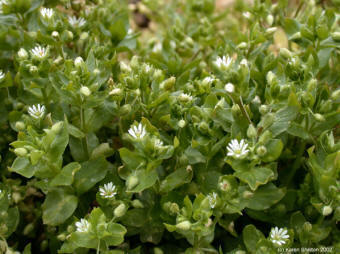
Chickweeds Stellaria media, Stellaria pubera,

Other Names:  Common Chickweeds, Star Chickweed, Mouse-ear Chickweed


Habitat

  Chickweeds are an annual herb, widespread in temperate zones, arctic zones, and throughout, probable origin Eurasia. Chickweeds have established themselves all over the world, possibly carried on the clothes and shoes of explorers. They are as numerous in species as they are in region. Most are succulent and have white flowers, and all with practically the same edible and medicinal values. They all exhibit a very interesting trait, (they sleep) termed the 'Sleep of Plants,' every night the leaves fold over the tender buds and the new shoots.


The cultivation of this one is not necessary it is abundant and easy to find. Gather fresh edible plant between May and July, as soon as flowers appear, it can be used fresh or be dried for later herb use.

Properties
  
Chickweeds are Medicinal and edible, they are very nutritious, high in vitamins and minerals, can be added to salads or cooked as a pot herb, tasting somewhat like spinach. The major plant constituents in Chickweed are Ascorbic-acid, Beta-carotene, Calcium, Coumarins, Genistein, Gamma-linolenic-acid, Flavonoids, Hentriacontanol, Magnesium, Niacin, Oleic-acid, Potassium, Riboflavin, Rutin, Selenium, Triterpenoid saponins, Thiamin, and Zinc. The whole plant is used in alternative medicine as an astringent, carminative, demulcent, diuretic, expectorant, laxative, refrigerant, vulnerary. A decoction of the whole plant is taken internally as a post-partum depurative, emmenagogue, galactogogue and circulatory tonic. It is also used to relieve constipation, an infusion of the dried herb is used in coughs and hoarseness, and is beneficial in the treatment of kidney complaints. as an astringent, carminative, demulcent, diuretic, expectorant, laxative, refrigerant, vulnerary. A decoction of the whole plant is taken internally as a post-partum depurative, emmenagogue, galactogogue and circulatory tonic. It is also used to relieve constipation, an infusion of the dried herb is used in coughs and hoarseness, and is beneficial in the treatment of kidney complaints. New research indicates it's use as an effective antihistamine. The decoction is also used externally to treat rheumatic pains, wounds and ulcers. It can be applied as a medicinal poultice and will relieve any kind of roseola and is effective wherever there are fragile superficial veins or itching skin conditions.
Folklore Chickweed water is an old wives' remedy for obesity.
Recipes
Medicinal tea: To 1 tbls. dried herb, 2 if fresh, add 1 cup boiling water steep for 10 min. Take in ˝ cup doses 2 to 4 times daily, during a cold or flu.

Yarrow-Achillea millefolium


Other Names: Milfoil, Old Man's Pepper, Soldier's Woundwort, Knight's Milfoil, Thousand Weed, Nose Bleed, Carpenter's Weed, Bloodwort, Staunchweed
Habitat
     Yarrow is a perennial herb, native to Europe and Asia and naturalized in North America and most other countries throughout the world. Yarrow is very common along roadsides and in old fields, pastures, and meadows in the eastern and central United States and Canada.
Description
Cultivation    Yarrow is easily cultivated, will survive in poor soil. Prefers a well-drained soil in a sunny position. A very good companion plant, it improves the health of plants growing nearby and enhances their essential oil content thus making them more resistant to insect predations also improves the soil fertility.
    Yarrow grows from 10 to 20 inches high, a single stem, fibrous and rough, the leaves alternate, 3 to 4 inches long and 1 inch broad, larger and rosette at the base, clasping the stem, bipinnatifid, the segments very finely cut, fern-like, dark-green, giving the leaves a feathery appearance. The flowers are several bunches of flat-topped panicles consisting of numerous small, white flower heads. Each tiny flower resembling a daisy. The whole plant is more or less hairy, with white, silky appressed hairs. Flowers bloom from May to August. Gather stem, leaves and flower heads in bloom, dry for later herb use. Dry herb edible as a spice or flavoring, strong sage flavor.
Properties
    Yarrow is a very valuable medicinal herb, with much scientific evidence of use in alternative medicine as an antiseptic, antispasmodic, astringent, carminative, diaphoretic, digestive, emmenagogue, stimulant, and tonics, vasodilator and vulnerary. Yarrow is used against colds, cramps, fevers, kidney disorders, toothaches, skin irritations, and hemorrhages, and to regulate menses, stimulate the flow of bile, and purify the blood. Medicinal tea is a good remedy for severe colds and flu, for stomach ulcers, amenorrhea, abdominal cramps, abscesses, trauma and bleeding, and to reduce inflammation.  The main constituents are volatile oils including linalool, camphor, sabinene, and chamazulene, sesquiterpene lctones, flavanoids, alkaloids including achilleine, polyacetylenes, triterpenes, salicylic acid, coumarins, and tannins which prove these uses in alternative medicine to be effective. Extracts of yarrow exhibit antibiotic activity and may also act as anti-neoplastic drugs. Externally for treating wounds and stopping the flow of blood. Yarrow oil has been traditionally used in hair shampoos. Some caution is advised , large or frequent doses taken over a long period may cause the skin to be more sensitive to sunlight.

Folklore
    It was one of the herbs dedicated to the Evil One, in earlier days, being sometimes known as Devil's Nettle, Devil's Plaything, Bad Man's Plaything, and was used for divination in spells.

Recipe
An aromatic tea: To 1 tsp. dried herb add 1 cup boiling water, steep for 10 min. sweeten to taste. Take at bedtime.


http://www.altnature.com

Speedwell Herb-Veronica Offinalis


Speedwell Herbal Uses and Medicinal Properties

 Speedwell is considered to be diuretic, expectorant, stomachic, tonic.  Speedwell was once a highly regarded in England as a healthy, relaxing, herbal tea and tonic. As with most astringent, bitter herbs, an infusion of speedwell can be used as a wash for troubled skin. Recent studies have shown Speedwell tea may be an effective preventative treatment for ulcers. It is most often used been used for coughs and congestion.
 In modern herbal medicine, speedwell tea, brewed from the dried flowering plant, sometimes serves as a cough remedy or as a lotion for irritated or infected skin. The somewhat bitter and astringent taste and tea like smell of speedwell led to its use as a tea substitute in 19th-century France, where it was called the d'Europe, or "Europe tea." The French still use this term as a name for speedwell.
The Emperor Charles the Fifth of Spain is said to have derived much relief to his gout from the use of this herb. It contains tannin, and a particular bitter principle.
Experimental anti-ulcer activity of Veronica officinalis L. extracts.
Scarlat M, Sandor V, Tămaş M, Cuparencu B.
Abstract
In indomethacin-induced ulcers in albino rats, the anti-ulcerogenic effects of some extracts prepared from Veronica officinalis L. were investigated. The extracts had a significant anti-ulcerogenic activity. In ulcer healing experiments performed in rats by administering reserpine, the extracts were found to enhance the regeneration of the gastric mucosa. These results seem to confirm the popular observations according to which the decoction from Veronica officinalis L. possessed useful properties in the treatment of gastric ulcers. http://www.ncbi.nlm.nih.gov/pubmed/4021513


"Although speedwell has a reputation, especially in Europe, as a healer of all illnesses, it is used primarily as an expectorant for respiratory problems. It has also been used for stomach ailments, migraine headache, and as a gargle for mouth and throat soars, The fresh juice taken in large quantities is helpful for gout, and it can also be used externally to relieve chronic skin problems."
 
http://www.consider-the-lilies.org/Speedwell.htm

Habitat and Description

 The Speedwells of my area are tiny yard weeds and also found in ditches in early spring.  It may cover large areas of ground, but is inconspicuous due to its small stature. However, if you look close you will see a dainty medicinal beauty with either blue flowers, or white flowers striped with blue.  
 Speedwell flowers range from whitish blue with blue streaks to violet. They are small, crowded on spike-like racemes from axils of leaves, often from alternate axils. Calyx 4-parted; corolla of 4 lobes, lower lobe commonly narrowest ; 2 divergent stamens inserted at base and on either side of upper corolla lobe ; a knob-like stigma on solitary pistil. Stem: From 3 to 10 in. long, hairy, often prostrate, and rooting at joints. Leaves: Opposite, oblong, obtuse, saw-edged, narrowed at base. Ivy Leaf Speedwell is has three lobed leaves with fine hairs. Fruit: Compressed heart-shaped capsule, containing numerous flat seeds.
 Distribution - From Michigan and Tennessee eastward, also from Ontario to Nova Scotia. Probably an immigrant from Europe and Asia.

How to Grow Speedwells

 Speedwells are common yard weeds that can become invasive, and are often grown as ground cover. They thrive in poor damp soil. Most speedwells are annuals and grow easily from seeds from the previous year's flowers.

History and Folklore

 The name speedwell comes from an old meaning of the word speed, "thrive." The scientific term Veronica goes back some 500 years and is apparently connected with the name of the legendary Veronica, who is said to have wiped the face of Jesus as He went to Calvary. It is possible that the genus Veronica was named after her because the flowers supposedly resemble the markings left on the cloth with which she wiped Jesus' face.
The Germans also name this plant Ehren-preis, or Prize of Honour; which fact favours the supposition of its being the true "Forget-me-not," or souveigne vous de moy, as legendary on knightly collars of yore to commemorate a famous joust fought in 1465 between the most accomplished champions of England and France.

Recipe

 Speedwell may be used for herbal tea. Use 1-2 tsp. of dried herb per cup of hot water. Speedwell can also be used in skin preparations such as lotions or herbal salves.
http://www.altnature.com


Red Clover Trifolium pratense


Other Names:  Meadow Honeysuckle, Meadow Trefoil, Purple Clover, Trefoil, Wild Clover, Cleaver Grass, Marl Grass, Cow Grass
Habitat
 Red Clover is a perennial herb, origin believed to be Britain where it is abundant, now a world wide escape, naturalized in nearly every country, even the Arctic Circle and high up into mountains. Cultivation: Red Clover is an easily grown plant, from seed or root cuttings, requires little attention. The long root is rhizome, and sends out runners, producing several stems 1 to 2 feet high, slightly hairy; leaves ternate, leaflets ovate, slightly toothed, ending in long point often lighter colored V shape in center, flowers red to purple, fragrant, in dense terminal ovoid or round heads. Blooming from April thought out the summer months. Harvest flowers and dry for later herb use as it comes into bloom. Harvest edible leaves for salad before flowers fully bloom.

Properties
  Red Clover is edible and medicinal, the young leaves and new flowers are harvested, and are used in salads, soups, or as a pot herb. The sprouted seeds are edible in salads and have a crisp texture and robust flavor. A delicate sweet and medicinal tea is made from the fresh or dried flowers, it is alterative, antiscrofulous, antispasmodic, aperient, detergent, diuretic, expectorant, sedative and tonic. Red Clover has also shown anticancer activity, poultices of the herb have been used as local applications to cancerous growths. Internally, the Red Clover plant is used as an alternative medicine for skin complaints such as eczema and psoriasis, cancers of the breast, ovaries and lymphatic system, chronic degenerative diseases, gout, whooping cough and dry coughs. Red clover is now involved in research for a certain medicinal alkaloid 'slaframine' which is often found in diseased clover, this substance has shown antidiabetic and anti-AIDS activity.

Folklore
   In the middle ages the clover was considered a charm warn to ward off evil spirits and witches. The four leaf clover was said to have even more power against evil, a five leaf clover was said to be warn by witches to give them evil powers, and a two leaf clover would give a maiden the power to see her future lover.

Recipe
"Medicinal" tea: To 1 tbls. dry flowers or herb add 1 cup boiling water, steep 10 min., sweeten to taste, drink warm for cough and upset stomach.

Mullein Verbascum thapsus


Other Names 
Adam's Flannel, Beggar's Blanket, Candlewick Plant, Common Mullein, Flannel Mullein, Flannel Plant, Hag's Taper, Jupiter's Staff, Molene, Mullein, Velvet Dock, Velvet Plant, Woolly Mullin

Habitat
 Alien, naturalized, biennial herb. Widely distributed plant, being found all over Europe and in temperate Asia as far as the Himalayas, and in North America it is exceedingly abundant. Great Mullein is found growing on hedge-banks, by roadsides and on waste ground, more especially on gravel, sand or chalk. Sunny positions in uncultivated fields and especially on dry soils. Cultivation: Great Mullein is an easily grown plant, it succeeds in most well-drained soils, including dry ones, and prefers a sunny position. Dislikes shade and wet soils. The leaves (first season) at the base of the stem form a rosette of numerous, large, 6 to 15 inches long and up to 5 inches broad, but become smaller as they ascend the stem, on which they are arranged on alternate sides. They are whitish with a soft, dense mass of hairs on both sides, which make them feel very furry and thick. The root is a long taproot with a fibrous outer cover and fleshy inside. The flower-spike (second season) has been known to attain a height of 7 or 8 feet, covered with densely crowded, sulphur-yellow, flowers about an inch across with five rounded petals. Blooming during July and August. Harvest the entire plant when in bloom and dry for later herb use.

Properties
  Great Mullein has been used as an alternative medicine for centuries, and in many countries throughout the world, the value of Great Mullein as a proven medicinal herb is now backed by scientific evidence. Some valuable constituents contained in Mullein are Coumarin and Hesperidin, they exhibit many healing abilities. Research indicates some of the uses as analgesic, antihistaminic, anti-inflammatory, anticancer, antioxidant, antiviral, bacteristat, cardio-depressant, estrogenic, fungicide, hypnotic, sedative and pesticide are valid.
    An infusion is taken internally in the treatment of a wide range of chest complaints and also to treat diarrhea and bleeding of the lungs and bowels. The leaves, root, and the flowers are anodyne, anti-inflammatory, antiseptic, antispasmodic, astringent, demulcent, diuretic, emollient, expectorant, nervine, and vulnerary.
   Mullein oil is a very medicinal and valuable destroyer of disease germs. An infusion of the flowers in olive oil is used as earache drops, or as a local application in the treatment of piles and other mucous membrane inflammations. This infusion is a strong antibacterial. The oil being used to treat gum and mouth ulcers is very effective. A decoction of the roots is used to alleviate toothache and also relieve cramps and convulsions. It is also used in alternative medicine for the treatment of migraine headaches accompanied with oppression of the ear.
    The whole plant possess slightly sedative and narcotic properties. The seeds are considered toxic.They have been historically used as a narcotic and also contain saponins.
The dried leaves are sometimes smoked to relieve the irritation of the respiratory mucus membranes, and the hacking cough of consumption. They can be employed with equal benefit when made into cigarettes, for asthma and spasmodic coughs in general. Externally, a medicinal poultice of the leaves is applied to sunburn, ulcers, tumors and piles.
Other Uses
    Dye, Insecticide, Insulation, Lighting, Tinder, Wick. A yellow dye is made from the flowers by boiling them in water. When used with dilute sulphuric acid they produce a rather permanent green dye, this becomes brown with the addition of alkalis. An infusion of the flowers is sometimes used to dye the hair a golden color. The leaves contain rotenone, which is used as an insecticide. The dried leaves are highly flammable and can be used to ignite a fire quickly , or as wick for candles.

Folklore
    An old superstition existed that witches used lamps and candles provided with wicks of Mullein in their incantations, and another of the plant's many names, 'Hag's Taper', refers to this. Both in Europe and Asia the power of driving away evil spirits was ascribed to the Mullein. Being a sure safeguard against evil spirits and magic, and from the ancient classics, it was this plant which Ulysses took to protect himself against the wiles of Circe.

Recipes
Tea: An aromatic tea can be made by boiling 1 tbs. dried leaves or root, in 1 cup water for 5 - 10 min. A sweeter tea can be made by infusing the fresh or dried flowers. Or for children and the elderly use milk instead of water. Sweeten if desired.

Mullein oil: Use flowers or root. Place in blender or crush, fill jar, cover with olive oil, set in warm place for 2 weeks. Strain before use.